

Removable or fixed
The same implants, two ways to wear them
Zest makes the Locator attachment in a removable form and a fixed form. The implants and the attachment system are the same; what differs is who takes the denture out, and how often.
Removable. The denture clips onto the Locators and you lift it out to clean it, as often as you like.
Fixed. The same implants carry a prosthesis that you do not remove. It is taken off by the dentist every 4 to 6 months, cleaned, and put back.
Both routes use 2 to 4 implants in the jaw and the same attachment. Which one suits you is part of the conversation at the consultation, and it is decided before any implant goes in.
The options
Three answers to the same problem
A removable overdenture, a fixed prosthesis on the same attachment, and a fixed full-arch bridge. The difference is what holds the teeth, how many implants it takes, and who takes them out.
A removable overdenture uses 2 to 4 implants in the jaw. It clips onto the Locators and you lift it out to clean it.
A fixed prosthesis on the same attachment uses the same 2 to 4 implants. You do not take it out; the dentist removes it every 4 to 6 months to clean it.
A fixed full-arch bridge is a different treatment. A full arch uses 4 to 8 implants to carry one bridge across the whole jaw. A full-arch bridge is fixed onto implants in the jawbone and stays in.
An overdenture is supported partly by the tissue and partly by the implants. A full-arch bridge is carried by the implants alone, which is why it takes more of them.
Which of these applies to you depends on how many teeth are still in the jaw, how much bone is there, and what the scan shows. That is the conversation at the consultation.
Candidacy
What the scan decides
Whether implants can hold a denture in your jaw is read from the scan, not from the denture you are wearing.
At the consultation Dr. Alzohaili examines your mouth and, for most implant cases, takes a CBCT scan. A CBCT scan is a 3D x-ray. It shows how much bone is there and where the nerves and the sinuses sit, which is what a plan can be built from.
The scan shows whether the jaw can hold 2 to 4 implants, and where they would go. It is done for the upper jaw and the lower jaw the same way.
Where there is not enough bone, or not enough gum tissue, grafting may be needed before the implant goes in.
Some people are not suitable for this treatment. If that is what the scan shows, Dr. Alzohaili will say so at the consultation and go through what else is possible.
The process
How overdenture treatment works
Four stages, from the first scan to the finished denture.
01
Consultation and scan
Dr. Alzohaili examines your mouth and, for most implant cases, takes a CBCT scan. The scan shows the bone and the position of the nerves and sinuses. Costs are quoted in full at this appointment.
02
Planning
Your case is planned in 3D from the scan, including how many implants your jaw takes and whether the denture is the removable or the fixed route. We print the surgical guide in house on a SprintRay Pro 2.
03
Placement
Between 2 and 4 implants are placed through the guide under local anaesthetic. Sedation options are available and are discussed at the consultation.
04
The finished denture
The denture is fitted 4 to 6 weeks after the implants are placed. That is shorter than the wait for a crown or a bridge, because the denture is supported partly by the tissue rather than resting entirely on the implants.
Maintenance
What it asks of you, and what it costs to keep
An implant overdenture needs upkeep. Both routes do, in different ways.
The Locator holds the denture with a silicone insert. That insert wears, and it is replaced every 1 to 2 years. Our fee for that visit is about $300, whichever inserts are changed. It is an approximate figure rather than a quote, and your costs are quoted in full at the consultation.
On the fixed route the prosthesis is taken off by the dentist every 4 to 6 months, cleaned, and put back.
The post itself does not decay, and implants do not get cavities. The gum and bone around them still need brushing, flossing and regular check-ups.

Cases
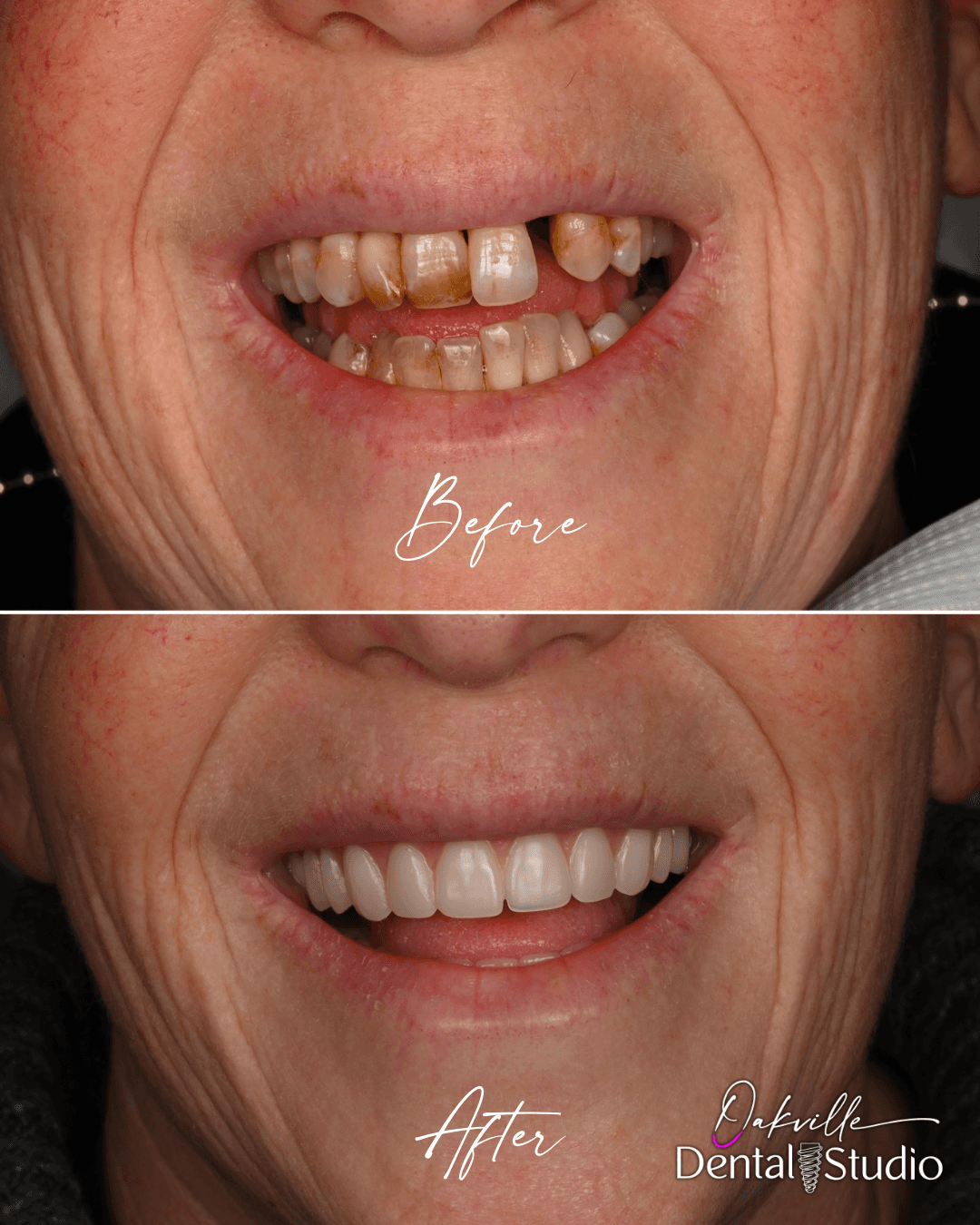
Cases from the practice
Treatment carried out here, one patient at a time.
Case 01 · Full-arch
Failing teeth replaced with a fixed full arch.
Straumann BLX · Same-day placement
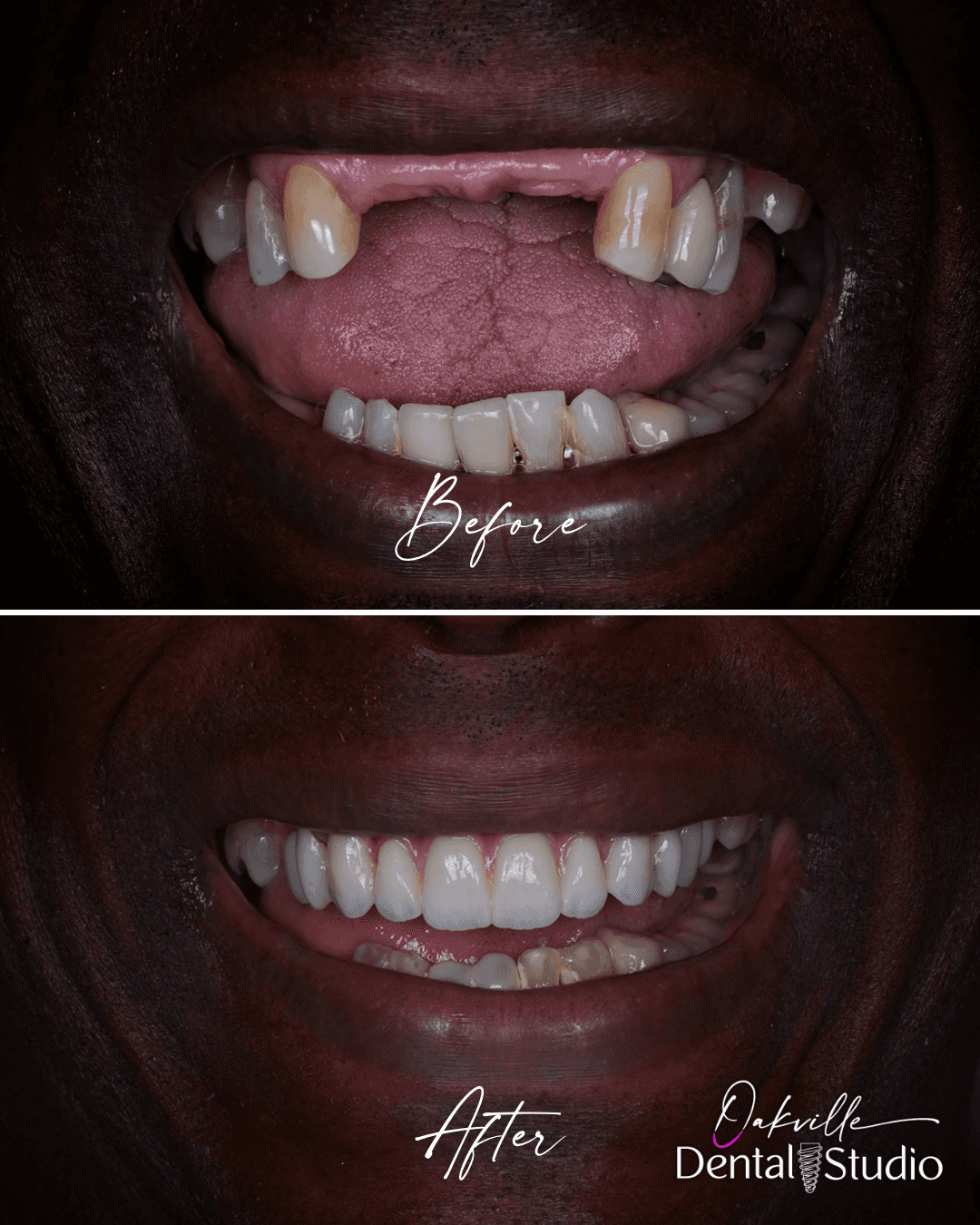
Case 02 · Upper front teeth
Missing upper front teeth restored with implants and veneers.
Implants and veneers · Planned digitally

Case 03 · Single front tooth
One missing front tooth replaced with a single implant.
Custom-shade zirconia crown · Guided placement
Each case is one patient’s treatment. Results vary from one patient to the next.
Questions
Common questions about implant overdentures
If your question isn't here, ask at the consultation.
Between 2 and 4 in a jaw. The number depends on how much bone is there, and it is decided from the CBCT scan at the consultation.
On the removable route, yes: the denture clips onto the Locators and you lift it out to clean it. There is also a fixed route on the same implants and the same attachment, where you do not take it out and the dentist removes it every 4 to 6 months for cleaning.
The denture is fitted 4 to 6 weeks after the implants are placed. That is shorter than the wait for a crown or a bridge, because the denture is supported partly by the tissue rather than resting entirely on the implants.
The silicone insert inside the Locator wears and is replaced every 1 to 2 years, and our fee for that visit is about $300. On the fixed route the prosthesis is also taken off by the dentist every 4 to 6 months for cleaning.
Yes. It can be done in the upper jaw, the lower jaw, or both.
An implant can become infected. It can fail to join to the bone, in which case it has to be removed. The gum and bone around an implant can become inflamed, which is called peri-implantitis. Dr. Alzohaili goes through the risks in your case at the consultation.
Dr. Alzohaili provides a 3-year limited warranty on implants he places. It is conditional on good oral hygiene, meaning brushing, flossing and regular dental cleanings, on avoiding smoking and excessive alcohol, and on attending regular check-ups so the implant can be monitored.
