Full-arch implants

Full-arch implants in Oakville

Fixed teeth for one jaw, held by implants. Dr. Kutaiba Alzohaili plans each case on an in-house CBCT scan and fits temporary teeth when the implants go in.

Full-arch implants

Full-arch implants in Oakville

Fixed teeth for one jaw, held by implants. Dr. Kutaiba Alzohaili plans each case on an in-house CBCT scan and fits temporary teeth when the implants go in.

What it is

One fixed set of teeth, held by implants

Full-arch treatment replaces all the teeth in a jaw with a bridge fixed onto 4 to 8 implants, rather than a denture that rests on the gum.

Implants are posts placed in the jawbone. For a full arch, 4 to 8 of them carry one bridge across the jaw. The number depends on your bone and is decided from the CBCT scan. The implants we place are Straumann BLX, which are Swiss-engineered and made of Roxolid, an alloy of 85% titanium and 15% zirconium.

Temporary teeth in PMMA are fitted at the same appointment as the implants. You wear that set while the bone grows around the implants, and the final bridge is made and fitted after 3 to 6 months.

The final bridge is full zirconia, or zirconia on a titanium frame. Which of the two suits your case is Dr. Alzohaili’s judgment, and he goes through it with you before anything is made. The bridge is fixed to the implants. You do not take it out, and it is cleaned in the mouth rather than in a glass.

Once teeth are taken out, the jawbone that held them starts to shrink. Implants sit in that bone and keep it under load, which helps preserve it.

Implants do not get cavities. The gum and bone around them still need brushing, cleaning between the teeth, and regular check-ups.

Prefer a call back? Request one below.

Candidacy

What we look at before we plan anything

Whether full-arch treatment suits you is decided from the scan, not from a photograph of your teeth.

At the consultation Dr. Alzohaili examines your mouth and, for most implant cases, takes a CBCT scan. A CBCT scan is a 3D x-ray. It shows how much bone is there and where the nerves and the sinuses sit, which is what a plan can be built from.

Three things come out of that appointment: whether there is enough bone to hold implants, how many implants your case needs, and whether any teeth still in the jaw need to come out first. Extractions are done here, in the same practice, as part of the plan. Where there is not enough bone or gum, grafting may be needed before implants can be placed.

Being told elsewhere that there is not enough bone does not settle the question. Bone can be grafted, and the scan is what shows whether that applies in your case.

Some people are not suitable for this treatment. If that is what the scan shows, Dr. Alzohaili will say so at the consultation and go through what else is possible.

The process

How full-arch treatment works

Four stages, from the first scan to the finished bridge.

01

Consultation and scan

Dr. Alzohaili examines your mouth and, for most implant cases, takes a CBCT scan. The scan shows the bone and the position of the nerves and sinuses. Costs are quoted in full at this appointment.

02

Planning

Your case is planned in 3D from the scan, including any teeth that need to come out and any grafting that is needed first. Extractions are done here rather than referred out. We print the surgical guide in house on a SprintRay Pro 2.

03

Placement and temporary teeth

Between 4 and 8 implants are placed through the guide under local anaesthetic, and temporary teeth in PMMA are fitted at the same appointment. Sedation options are available and are discussed at the consultation.

04

The final bridge

The bone grows around the implants over 3 to 6 months. The final bridge is then made and fitted: full zirconia, or zirconia on a titanium frame, whichever suits your case.

Timeline

Teeth on the day, and the months that follow

Temporary teeth are fitted at the same appointment as the implants. The final bridge follows 3 to 6 months later.

The implants and a set of temporary teeth in PMMA go in at the same appointment. That set is what you wear while the implants integrate.

The bone grows around each implant over the following 3 to 6 months, and that is what carries the final bridge. Until it has, the temporary set is doing the work, which is why it is temporary and not the finished bridge.

At 3 to 6 months the final bridge is made and fitted: full zirconia, or zirconia on a titanium frame, whichever suits your case.

Technology

CBCT planning and guides printed in house

We plan full-arch cases on CBCT and print the surgical guide in house on a SprintRay Pro 2. Our imaging and scanning equipment is Dentsply Sirona. The implants we place are Straumann BLX, which are Swiss-engineered.

Technology

CBCT planning and guides printed in house

We plan full-arch cases on CBCT and print the surgical guide in house on a SprintRay Pro 2. Our imaging and scanning equipment is Dentsply Sirona. The implants we place are Straumann BLX, which are Swiss-engineered.

Digital planning

The case, planned on screen first

Before surgery, the implants are planned in software, in most implant cases on an in-house CBCT scan, positioned against the bone and the nearby nerves and sinuses. That plan is then used to design the surgical guide, printed at the practice.

Digital planning

The case, planned on screen first

Before surgery, the implants are planned in software, in most implant cases on an in-house CBCT scan, positioned against the bone and the nearby nerves and sinuses. That plan is then used to design the surgical guide, printed at the practice.

The options

How it differs from the alternatives

Two comparisons come up at every full-arch consultation. Both are differences in how the teeth are held, not claims about which treatment is right for you.

Against a conventional denture. A denture rests on the gum and is taken out for cleaning. A full-arch bridge is fixed onto implants in the jawbone and stays in. A denture sits on bone that is no longer under load from tooth roots, and that bone shrinks over time; implants keep the bone under load.

Against replacing teeth one at a time. A single implant replaces a single tooth, which means one implant for each tooth being replaced. A full arch uses 4 to 8 implants to carry one bridge across the whole jaw.

Which of these applies to you depends on how many teeth are still in the jaw, how much bone is there, and what the scan shows. That is the conversation at the consultation.

You may have seen this treatment called All-on-X elsewhere. It is the same idea: a full arch of teeth carried by implants.

Cost

What treatment costs, and paying over time

How treatment is quoted, and how it can be paid.

Full-arch treatment is quoted per case, not per tooth. You are given the full cost at the consultation, once your case has been assessed.

Treatment can be paid over up to 12 months at 0% interest, arranged directly with the practice. There is no outside lender and no credit application: the term and deposit are set for your case and agreed in writing.

Prefer a call back?

Leave your details and the front desk will call you back to answer your questions or book a consultation.

The front desk calls back during opening hours. How your details are used is set out in our privacy policy.

Cases

Cases from the practice

Treatment carried out here, one patient at a time.
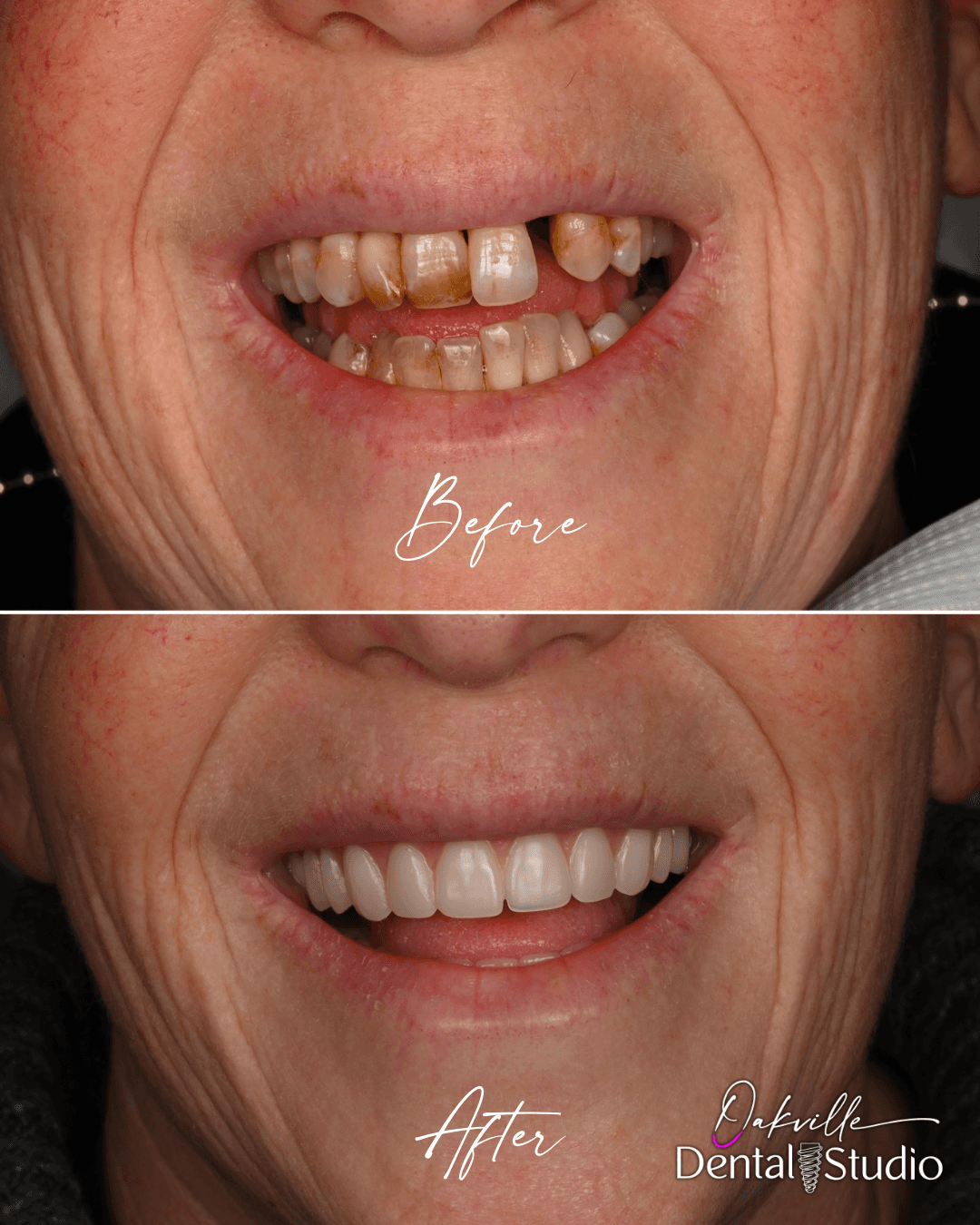
Case 01 · Full-arch

Failing teeth replaced with a fixed full arch.

Straumann BLX · Same-day placement
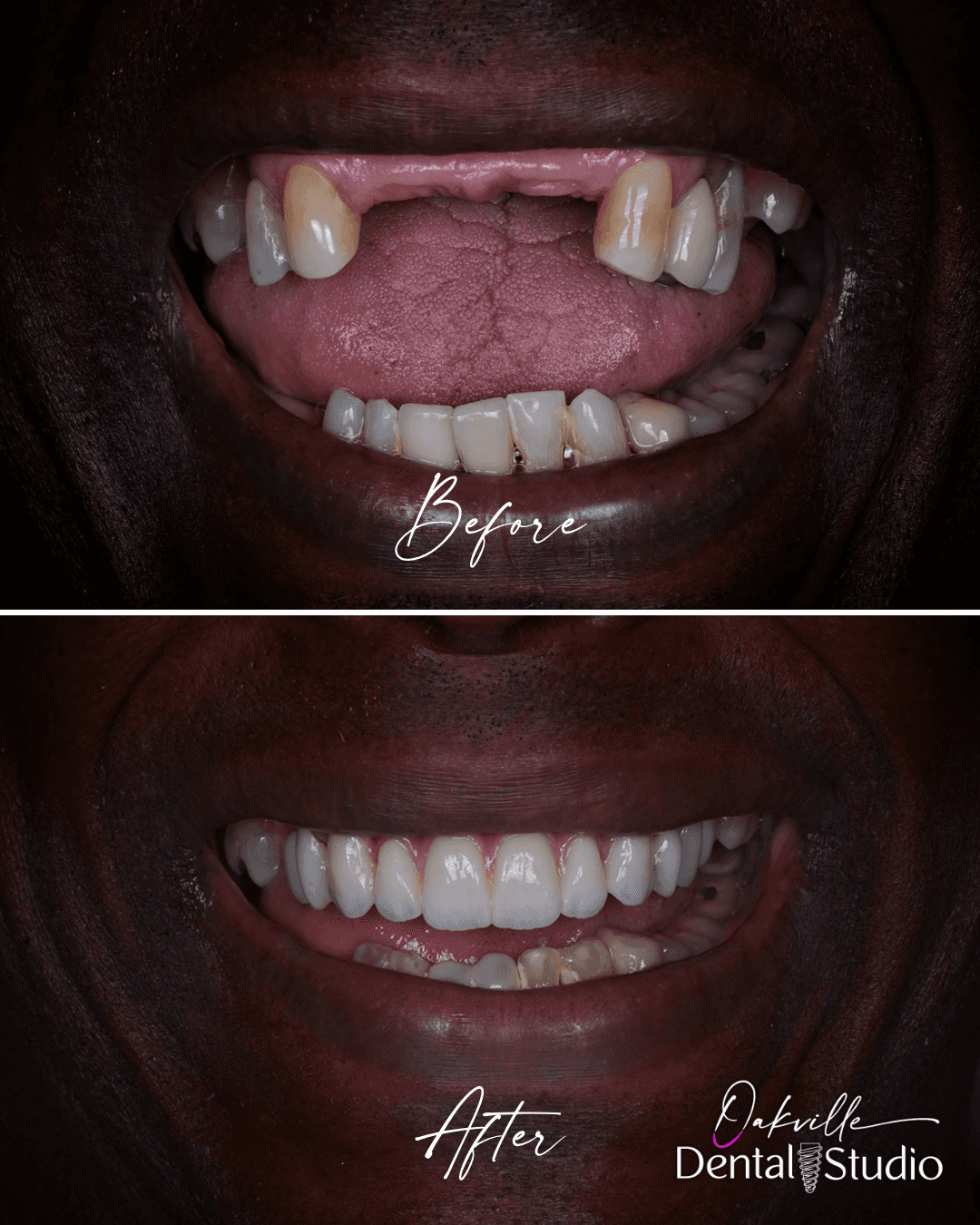
Case 02 · Upper front teeth

Missing upper front teeth restored with implants and veneers.

Implants and veneers · Planned digitally

Case 03 · Single front tooth

One missing front tooth replaced with a single implant.

Custom-shade zirconia crown · Guided placement

Each case is one patient’s treatment. Results vary from one patient to the next.

Patients

In patients' own words

Selected by Dr. Alzohaili and shown exactly as the patients wrote them.

Each comment is one patient’s experience. Results vary from one patient to the next.

Questions

Common questions about full-arch implants

If your question isn't here, ask at the consultation.

Full-arch treatment is quoted per case. You are given the full cost at the consultation, once the CBCT scan has shown what your case needs.

The implants are placed under local anaesthetic. Sedation options are available, and we go through them with you at the consultation.

No. Temporary teeth in PMMA are fitted at the same appointment as the implants. You wear that set while the bone grows around the implants, which takes 3 to 6 months, and the final bridge is fitted after that.

Between 4 and 8 in an arch. The number depends on how much bone is there, and it is decided from the CBCT scan at the consultation.

Full zirconia, or zirconia on a titanium frame. Which one suits your case is Dr. Alzohaili's judgment, and he goes through it with you before the bridge is made.

Dr. Alzohaili provides a 3-year limited warranty on the implants he places and on the bridge. It is conditional on good oral hygiene, meaning brushing, flossing and regular dental cleanings, on avoiding smoking and excessive alcohol, and on attending regular check-ups so the implants can be monitored.

Rather we call you?

Leave your details and the front desk will call you back to answer your questions or book a consultation.

The front desk calls back during opening hours. How your details are used is set out in our privacy policy.

Next step

Book a consultation

We will examine your mouth, take a CBCT scan for most implant cases, and go through the options with you before any treatment begins. Costs are quoted in full at that appointment.

Next step

Book a consultation

We will examine your mouth, take a CBCT scan for most implant cases, and go through the options with you before any treatment begins. Costs are quoted in full at that appointment.